Research but don’t fall victim of fear mongering
Debate over “Sharia law” periodically resurfaces in the United States, often framed as a question of whether Islamic law poses a threat to the U.S. Constitution. Some advocates argue that certain interpretations of Sharia—particularly when treated as a governing legal system—are fundamentally incompatible with constitutional principles such as equal protection, due process, and the supremacy of civil law.
At the same time, constitutional scholars and civil liberties advocates caution that attempts to ban Sharia as a religion misunderstand how U.S. law already functions. The First Amendment protects the free exercise of religion, and the Constitution prohibits government from singling out any faith—Christian, Muslim, Jewish, or otherwise—for special restriction or punishment.
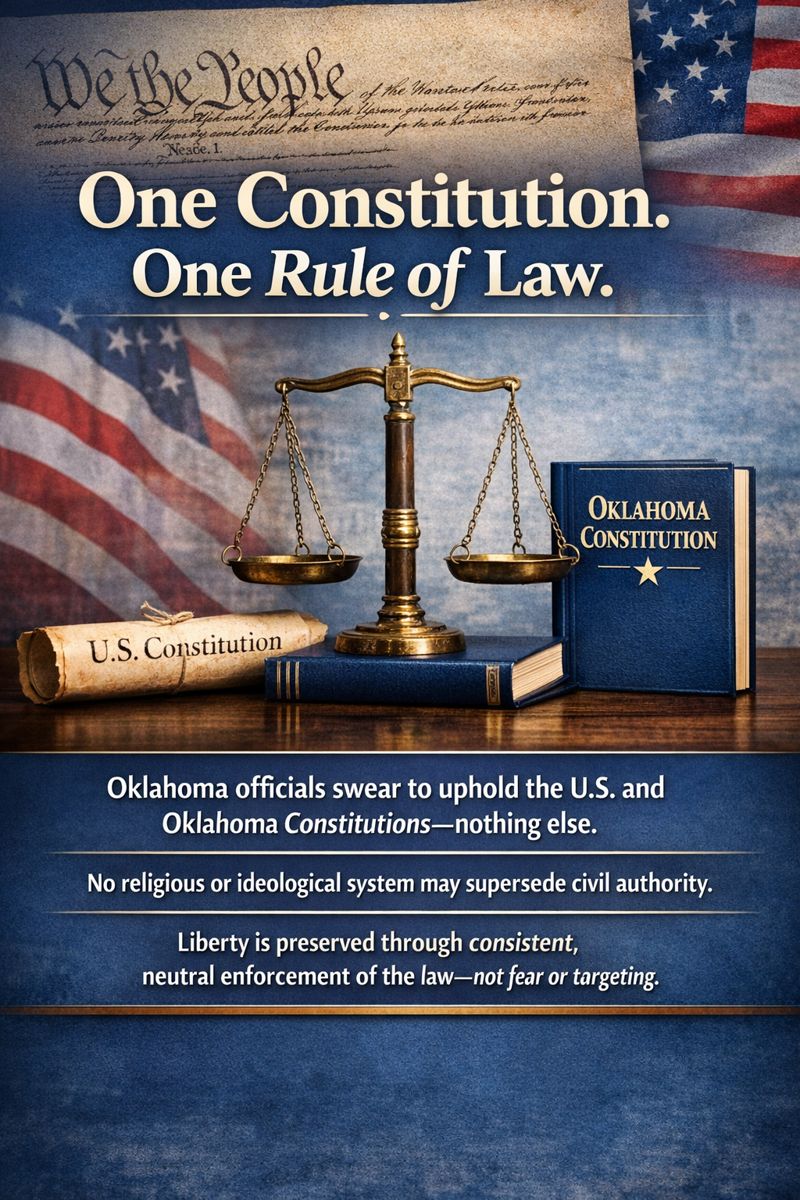
Critically, the U.S. Constitution already forbids the enforcement of any religious law as civil law. Courts may not apply religious rules when they conflict with constitutional rights. Any attempt—by any group—to impose a parallel legal system that supersedes constitutional authority is already invalid under existing law. No additional religious ban is required to reach this outcome.
Much of the legitimate concern expressed in public debate is more precisely directed at Islamism, a political ideology that seeks to merge religious doctrine with state power and asserts a higher authority than the Constitution. Political ideologies—unlike religious beliefs—are not protected from constitutional scrutiny, and any movement that seeks to replace constitutional governance with religious rule is incompatible with American law, regardless of the religion involved.
While no nationwide legislation banning Sharia exists, past efforts at the state level have demonstrated a key legal lesson: laws must be religion-neutral and grounded in constitutional process, not fear-based generalizations. Courts have consistently upheld the principle that civil law governs, and religious practice remains free so long as it does not violate constitutional rights.
Ultimately, the issue is not about suppressing faith, but about maintaining constitutional supremacy. The United States protects religious belief while drawing a firm boundary: no ideology, theology, or legal tradition may override the Constitution. Preserving that balance—religious liberty paired with constitutional authority—is both the strength of the American system and the proper framework for addressing these concerns.